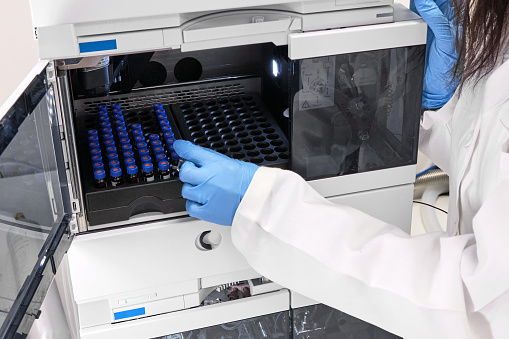
 Vein Tubing Choice Guide for Agilent HPLC Solutions The Blood Vessel Tubing Option Guide for Agilelt HPLC Systems provides info on HPLC system segments. The choice guide applies to modular and advanced devices. The very first part of the guide covers the numerous parts of an HPLC system. The second part reviews issues that can develop in HPLC systems and supplies a methodical method to troubleshoot them. The most typical source of contamination in reversed phase evaluation is water. It is advised to utilize deionized water that is purer than 98.5%. Usual deionizers present natural pollutants to water and must not be utilized. Also, make use of HPLC quality solvents and ion-pair reagents. Lower-grade solvents can trigger contamination, especially when the detector is sensitive. The second component of the Capillary Tube Option Guide for Agilent HPLC Systems lays out the distinctions in between HPLC grade and also preparative C18 columns. For reversed stage analyses, it is necessary to utilize water that is detoxified to be as pure as possible. Normal deionizers can present trace impurities into the water, which can be troublesome for high-sensitivity detectors. Water is one of the most usual source of pollutants in reversed stage analysis. As a result, it is important to make use of deionized water that is of high pureness. Numerous usual deionizers introduce natural impurities right into water, which are after that existing in the sample. The water must additionally be gone through a preparative C18 column. The solvent should be HPLC grade, consisting of the salts, ion pair reagents, as well as base as well as acid modifiers. Making use of lower-quality solvents calls for cleansing, which is lengthy and also ineffective. Additionally, the traces of pollutants can hinder high-sensitivity detectors. Water is the most typical resource of contamination in reversed phase analyses. If possible, make use of deionized water. It is important to make sure the purity of the solvent, since common deionizers introduce organic contaminants into the water. The highest purity is required for high-performance evaluation. When performing the analysis, the solvent ought to be HPLC grade. Higher-quality solvents are much better for HPLC, yet they should be thoroughly cleaned. Reversed phase evaluation calls for high-purity water. Generally, water is utilized as a solvent. The greater the purity, the greater the top quality of the solution. Low-grade solvents might introduce organic impurities as well as interfere with the example. They are also hard to clean. Therefore, lower-quality solvents are not the very best option for HPLC. You will certainly require to cleanse them with higher-grade ion-pair reagents.
6 Facts About Everyone Thinks Are True
5 Lessons Learned: